
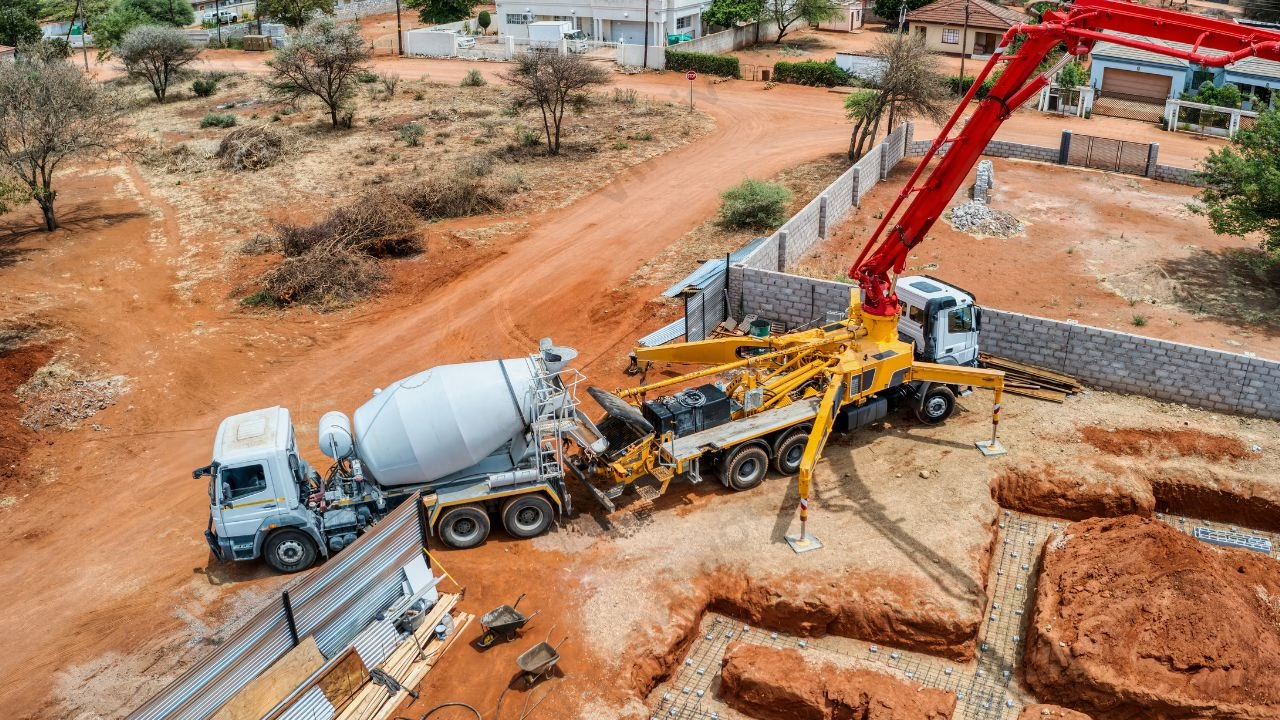
Understanding the types of concrete pumps is essential for selecting the right equipment for modern construction. Each pump works differently and offers specific benefits depending on the site conditions and structural requirements. Engineers use concrete pump types in construction to increase productivity, reduce manual labor, and deliver concrete with accuracy. Truck-mounted concrete pumps handle large projects efficiently by pumping concrete over long distances and at greater heights using boom arms. Meanwhile, stationary concrete pumps support continuous pumping operations in high-volume or high-rise structures. The advantages of concrete pumps include faster concrete placement, improved quality, and better safety for workers. By understanding various concrete pump applications, contractors can ensure the best performance when working on foundations, tunnels, bridges, and skyscrapers. This article explains all major concrete pump types and their impact on modern project success.
Table of contents
Concrete pump types in construction
Concrete pump types in construction help deliver concrete quickly and precisely to any required height or distance. These pumps improve productivity, safety, and quality on site while reducing manual labor. Engineers select the right pump depending on project scale, reinforcement congestion, accessibility, and structural height.
Types of Concrete Pumps
- Truck-mounted concrete pump (Boom pump)
- Stationary concrete pump (Line pump)
- Trailer-mounted concrete pump
- Specialized concrete pumps (Spider boom, Crawler pump, Underground pump)
Boom /Truck-mounted concrete pumps
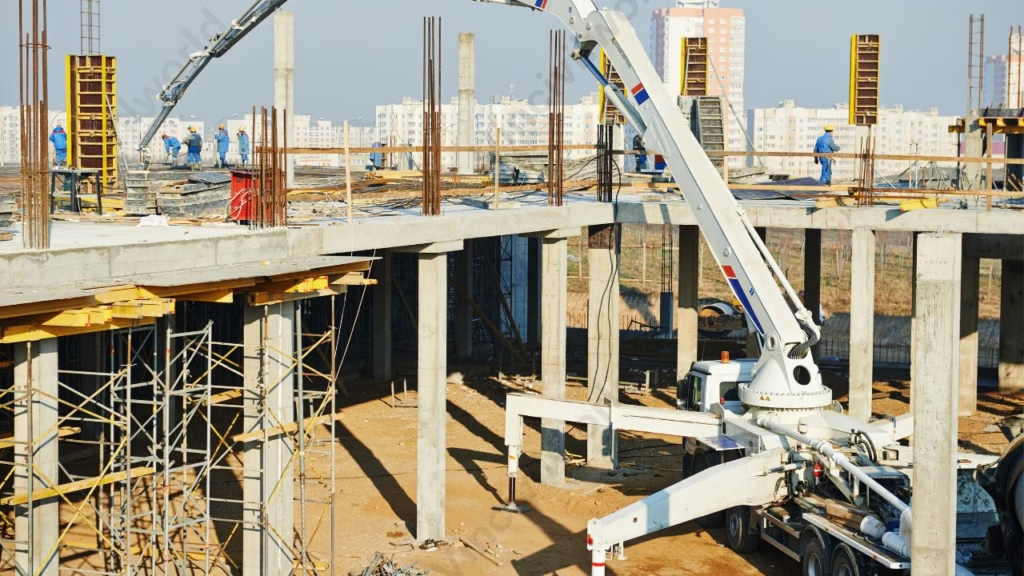
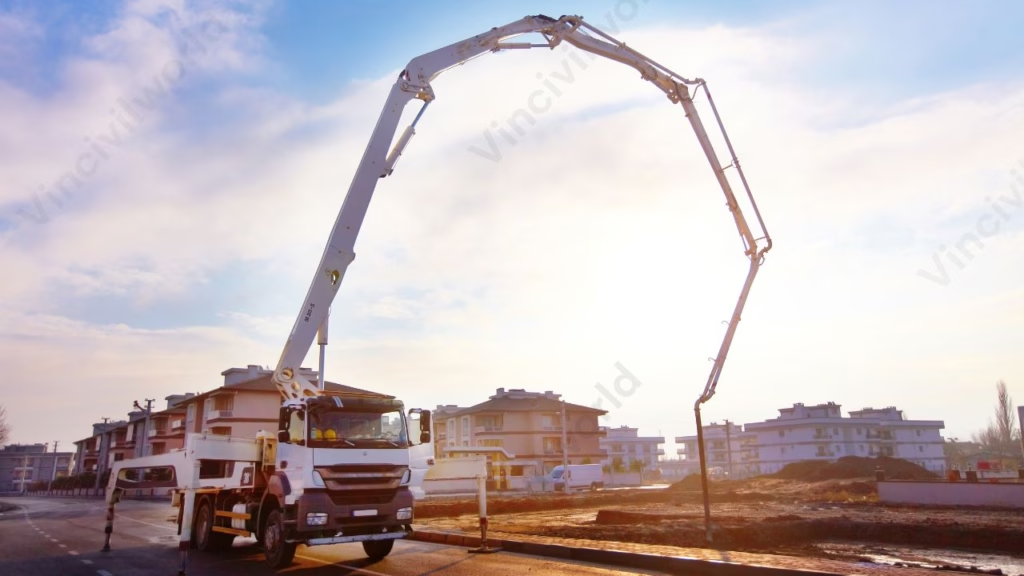
A truck-mounted concrete pump — commonly called a boom pump — delivers concrete quickly and accurately over long distances or to high elevations. It boosts construction speed and reduces manual labor.
Features and Advantages
- Long hydraulic boom with multiple articulating sections — delivers concrete over tall buildings, deep foundation pits, or distant spots.
- Mounted on a truck chassis — highly mobile and easy to reposition on site.
- High pumping capacity — ideal for large-volume pours like high-rise, bridges, and large slabs.
- Precise placement — reduces need for manual handling, improving safety and finish quality.
- Saves time and labor — faster concrete pouring compared to manual or line-pump methods.
Demerits / Limitations
- Requires good access and stable ground for truck setup — not ideal on narrow or unstable sites.
- High rental or ownership cost and maintenance.
- Boom reach limitations — very tall or complex geometry may need additional equipment or planning.
- Setup and dismantling time — requires space and time to deploy the outriggers and boom.
Line /Stationary concrete pump
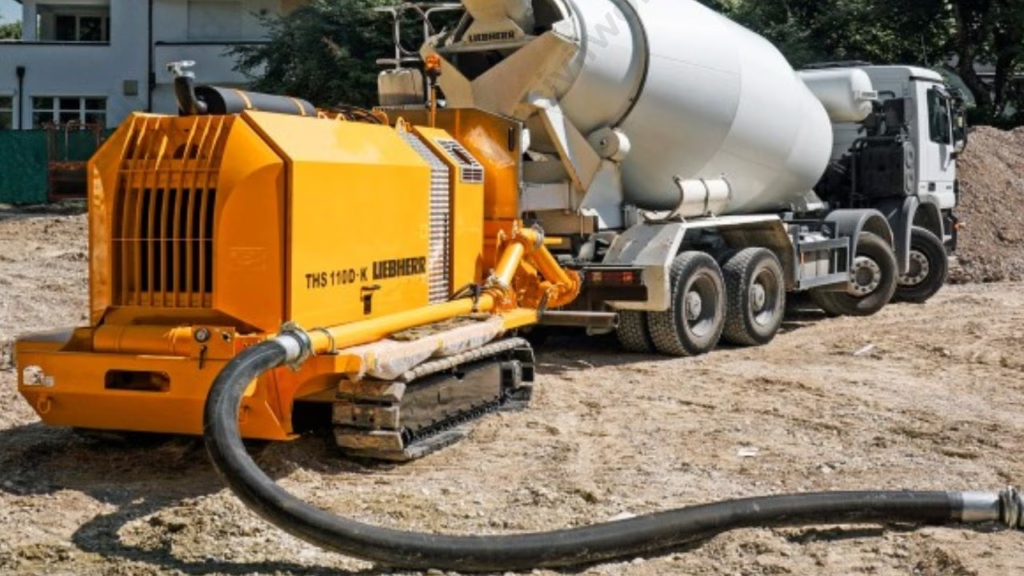
A stationary concrete pump, also called a line pump, stays fixed on site and delivers concrete through flexible hoses or pipelines. It suits small to mid-size pours and constrained work areas.
Features and Advantages
- Compact and easy to position — works well on tight or narrow sites where truck-mounted pumps can’t access.
- Uses flexible hoses or pipelines — allows concrete placement in hard-to-reach corners, basements, or low-clearance zones.
- Requires less setup space and simpler deployment — ideal for smaller pours or interior works.
- Lower operational cost compared to large boom pumps — cost-effective for small slabs, staircases, or repair works.
- Reduced noise and simpler handling — suitable for urban settings, residential sites, or renovation jobs.
Demerits / Limitations
- Lower pumping capacity — not ideal for high-volume pours or high-rise projects.
- Requires manual connection and repositioning of hoses for larger coverage — increases labor and time.
- Less efficient over long distance or height — concrete flow may degrade if hoses are too long or steep.
- Possible flow interruptions — need careful monitoring to avoid blockages or segregation.
Trailer-Mounted Concrete Pump
Trailer-mounted concrete pumps are compact units towed to the site and connected to pipelines or hoses for concrete delivery. They are ideal for small to medium-scale projects, interior works, and areas with limited access. These pumps offer flexibility, lower operating costs, and reliable performance for slabs, driveways, and repair works.
Specialized Concrete Pumps
Specialized concrete pumps like spider boom, crawler pump, and underground pump handle complex projects where standard pumps cannot operate. Spider booms fit inside tight spaces and deliver concrete overhead. Crawler pumps move on rough terrains, perfect for infrastructure projects. Underground pumps efficiently deliver concrete in tunnels, shafts, and mining projects.
Concrete pump applications
Concrete pumps improve placement speed and accuracy, making them ideal for projects requiring efficient delivery to high, distant, or congested areas.
- High-rise building construction
- Bridge decks and flyovers
- Foundations and retaining walls
- Tunnels and underground structures
- Residential slabs and floors
- Large industrial projects
- Dams and power plants
- Pile foundations and diaphragm walls
- Road pavements and airport runways
- Precast concrete installations
- Water tanks and reservoirs
- Narrow or restricted access sites
How to Choose a Concrete Pump ?
The concrete pump is chosen based on the construction project’s specifications. The following criteria are used to determine a successful and appropriate concrete pump:
- The Concrete Pump’s manufacturer
- Concrete Pump’s Function
- Construction Projects’ Schedule
- Price and economic factors
Manufacturer of equipment
The following are important considerations to consider when choosing a successful concrete pump manufacturer:
- Choose the best concrete pump manufacturer in the region. For this, consult local contractors and seek assistance from any recognised manufacturers.
- A wide range of options are now available online. Check out the top-rated concrete pumps and the feedback they’ve received.
- Under high pressure, the concrete pumping procedure is carried out. This long-term pressure must be able to withstand a strong concrete pump.
- If the concrete pump’s output is below average, building projects can break down and suffer losses.
Price and economic factors
The concrete pump chosen must be practical and work at the rate for which it was purchased. Avoid the risk of paying a high price for an underperforming concrete pump. Often choose a concrete pump based on its efficiency and cost. Compare the price and the results.
Selection Based on Work
When the concrete pump is chosen on the basis of work, two basic factors are considered:
- Volumetric Concrete Output
- The Pumping Pressure
The work determines the maximum volumetric concrete output required per hour for concrete construction. The pump’s pressure is specified based on this. This pressure is the criterion for choosing a concrete pump.
The strength of the concrete pump’s driving unit is determined by the desired concrete output (Q) and the pumping pressure (P). Then the hydraulic output (H) is given by:
H = Q x P
The concrete pump described above can be chosen based on the various construction projects.
- For the building of large road and highway projects, a boom or truck-mounted concrete pump is ideal.
- A boom concrete pump is the best option for concrete pouring at various altitudes and where there is a small area for concrete pouring.
- Boom concrete pumps can mount two or three robotic pump lines that function as a multi-purpose robotic arm, reducing the number of workers needed.
- For the building of sidewalks or slabs, a line concrete pump or a stationary concrete pump is used. The stationary pump is used if only a small amount of concrete needs to be pumped.
Concrete Pumps Advantages
Concrete pumps improve productivity, enhance safety, and ensure high-quality placement by delivering concrete precisely where needed, even in difficult and congested construction areas. The advantages of concrete pumps are listed below
- Faster concrete placement
- Reduced labor requirements
- Precise and controlled pouring
- Better quality and surface finish
- Improved safety and reduced manual handling
- Ability to reach high or distant locations
- Efficient pumping in congested reinforcement zones
- Less concrete wastage and cleanup
- Continuous and consistent concrete flow
- Works in areas inaccessible to trucks or cranes
Disadvantages
The disadvantages of using concrete pumps in building projects are as follows:
- The net cost would be higher.
- Due to the huge initial cost, these pumps are not feasible for structures with minor concrete volume.
That’s it about concrete pumps. Let us know in comments if you found this insightful.
Key Takeaways
- Concrete pumps convey concrete from a source to a casting location, using pistons to draw and discharge the material.
- There are two main types of concrete pumps: Boom Concrete Pumps and Line Concrete Pumps, each with specific use cases.
- Boom Concrete Pumps offer flexibility for high-rise construction, while Line Concrete Pumps are fixed and require more labour involvement.
- Choosing the right concrete pump depends on factors like the project’s specifications, manufacturer, and economic considerations.
- Concrete pumps provide advantages such as reduced labour reliance and adaptability, but they also come with higher initial costs.
Conclusion
Understanding the types of concrete pumps helps construction teams choose the most efficient equipment for each project. Different concrete pump types in construction, such as truck-mounted concrete pumps and stationary concrete pumps, improve concrete delivery in unique ways depending on height, distance, and site access. When used correctly, these pumps provide major advantages of concrete pumps, including faster placement, reduced labor, and better finishing quality. The right pump also ensures smooth and continuous flow through congested reinforcement during critical concrete pump applications like high-rise buildings, bridges, foundations, tunnels, and precast installation. By selecting the most suitable pump type based on project requirements, contractors can improve productivity, enhance structural performance, and achieve safe, reliable, and cost-effective results in modern construction.

5 thoughts on “Types of Concrete Pumps for Construction -Advantages”
Comments are closed.