
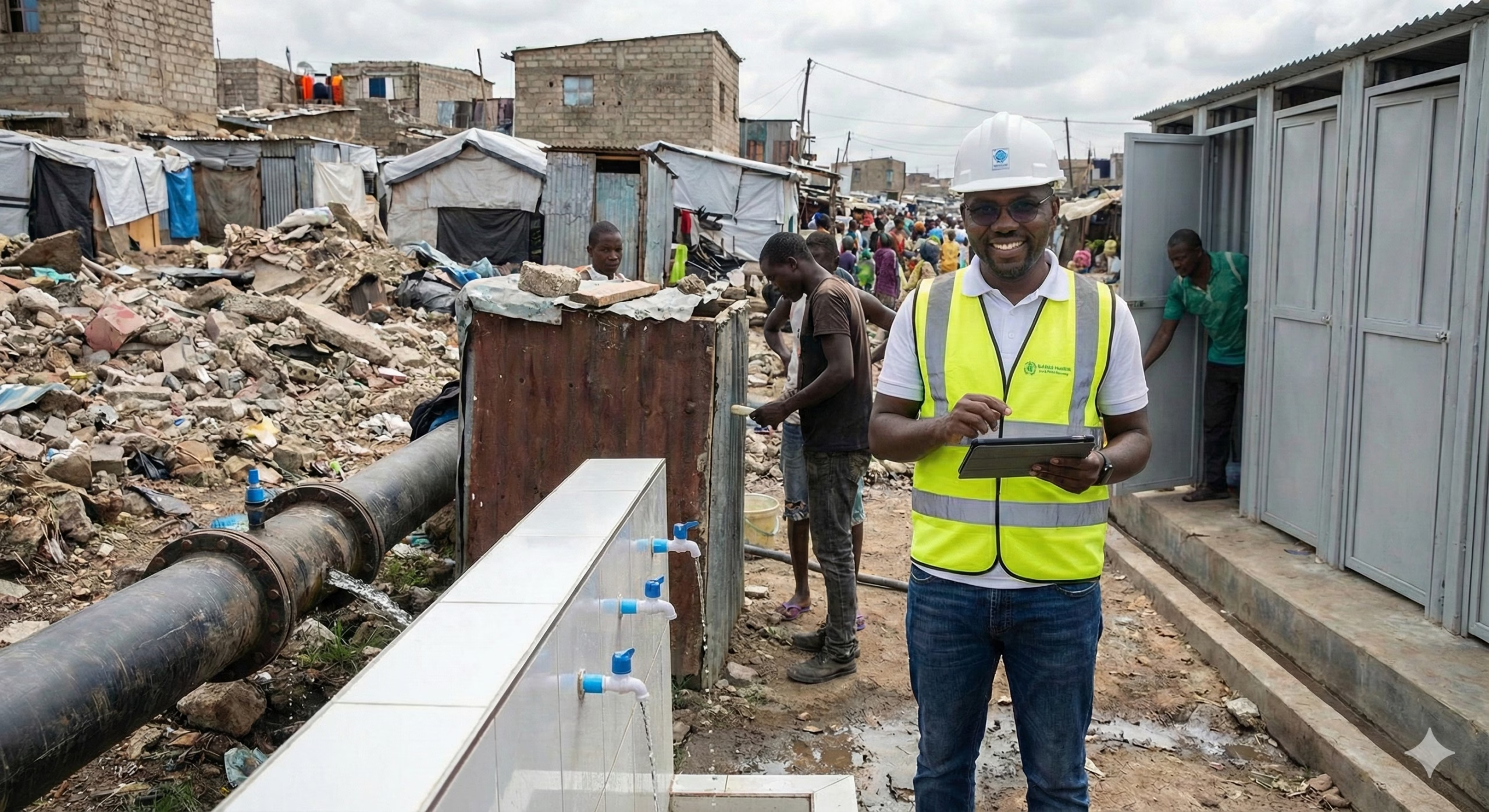
Public health engineering helps people to satisfy their humanitarian needs. Today’s crises occur often in urban areas. They usually last longer and have a wider regional effect. They cause widespread human misery, threaten basic services such as water supply and sanitation. Public health engineering is the innovative field dedicated to designing and managing systems for clean drinking water supply, sanitation, waste management, and disease prevention. By integrating environmental engineering with public health, it aims to improve quality of life and community well-being. Key roles include water supply engineering, wastewater management, sanitation infrastructure, and safeguarding against environmental hazards. Public health engineers ensure sustainable practices that address global health and hygiene challenges effectively.
In this blog, I will show what PHE is, its learning objectives and the role of a Public Health Engineer.
Table of contents
What is Public Health Engineering?
A clean and balanced Earth is a good place where everyone owns and bears responsibility for ensuring a good quality of life. It can be made possible through several ways.
Some of them are safe drinking water, proper sanitation, and best hygiene practices. This is what PHE envisions for our society. It is a specialisation in civil engineering.

Engineers and technical specialists in the fields of water, sanitation, electricity and other related fields are critical in meeting the challenges and rising demands. They are known as public health engineers.
Water processing, purification, transmission, and distribution are all handled by the PHE industry. Thus “Sanitary Engineering” is now referred to as “Public Health Engineering.”
Role of a Public Health Engineer
A public health engineer plays a crucial role in water supply engineering by planning, designing, and maintaining safe systems to deliver clean drinking water supply, ensuring community health and environmental sustainability. Sanitation engineering focuses on designing and managing systems for safe sewage and waste disposal, preventing pollution and disease transmission. It plays a vital role in maintaining community hygiene and protecting public health.
A PH Engineer must calculate design flow, design population, design area, and population density in order to do his job. They will play an important role in the present and future scenarios for tackling the following issues:
- Water, air, and soil contamination
- Environmental crises
- Industrial solid and liquid waste management
- Industrial and occupational safety hazardous
- Chemical hazards
A Public Health Engineer’s position today includes a wide range of responsibilities. This includes:
- Ensuring that water levels are controlled and managed
- Rivers are built to function with increasing populations
- Water and wastewater treatment systems are planned to meet growing demands
- Evaluating and reducing water use in domestic and industrial applications.
Now let’s move on to the learning objectives of this amazing course.
Objectives of Public Health Engineering:
The course consists of the following modules.
- Fundamentals of PHE
- Humanitarian contexts
- Water supply systems
- Sanitation
- Waste management and hygiene protection
Now let’s dive deeper into each of the objectives.
Fundamentals of Public Health Engineering:
- The first section explores the fundamentals of PHE
- It shows how engineers can help reduce mortality and morbidity in a variety of humanitarian situations.
- Engineers must have a thorough understanding of how infectious diseases spread in order to do so.
- You will encounter various disease transmission routes in the area.
- You will learn the steps needed to prevent the spread of these diseases.
- We will present real-life case studies to support your understanding.
Humanitarian contexts:
This section presents the humanitarian background in which public health engineering activities take place. It explains how long-running disputes impact urban basic services like water supply and sanitation and create public health problems.
Water Supply Systems:
This section takes a look at some of the most popular water technologies used from the source to the distribution point. We address the benefits and drawbacks of various water distribution systems that can be used.
Sanitation:
The section covers an analysis of sanitation technology and excreta management. Some of the humanitarian sector’s problems and activities are highlighted with the help of case studies.
Waste management & Hygiene promotion:
The section focuses on medical waste. It is a form of solid waste that public health engineers often encounter in humanitarian crises. Finally, in humanitarian emergencies, we address the crucial problem of behaviour modification and hygiene promotion.

A career in Civil Engineering with a specialisation in Public Health offers promising prospects. Some career choices that students can explore after their specialisation include:
- Building Engineering & Services
- Water Resources Engineering
- Renewable Water Resources Management
- Facility Management
- Operations Management
- Sustainable Design & Solutions
- Clean Energy
- Research & Development
- Entrepreneurship
This Civil Engineering specialisation will place you on the right track if you want to make a difference in combating the global issues. Hope you found this article insightful.
Key Takeaways
- Public health engineering focuses on ensuring clean water, proper sanitation, and hygiene to satisfy humanitarian needs.
- Public health engineers design and manage systems for water supply and waste management, addressing community health and environmental challenges.
- The course in public health engineering covers fundamentals, humanitarian contexts, water supply systems, and waste management.
- Students can pursue various careers, such as water resources engineering and sustainable design, after specialising in public health engineering.
- This field plays a vital role in combatting global health issues, particularly in urban areas facing crises.
Conclusion
Public health engineering plays a critical role in protecting community health and improving living standards. By ensuring safe drinking water, efficient wastewater management, proper sanitation, and effective waste disposal, it prevents the spread of diseases and promotes hygiene. This field also addresses modern challenges caused by rapid urbanization, climate change, and population growth by designing resilient and sustainable infrastructure systems. Public health engineers collaborate with health professionals, environmental experts, and government agencies to create healthier environments for all. Their work supports emergency response, safeguards natural resources, and enhances overall public well-being. In summary, PHE is a key force behind safer communities, sustainable development, and a healthier future — ensuring that every person has access to essential environmental health services.