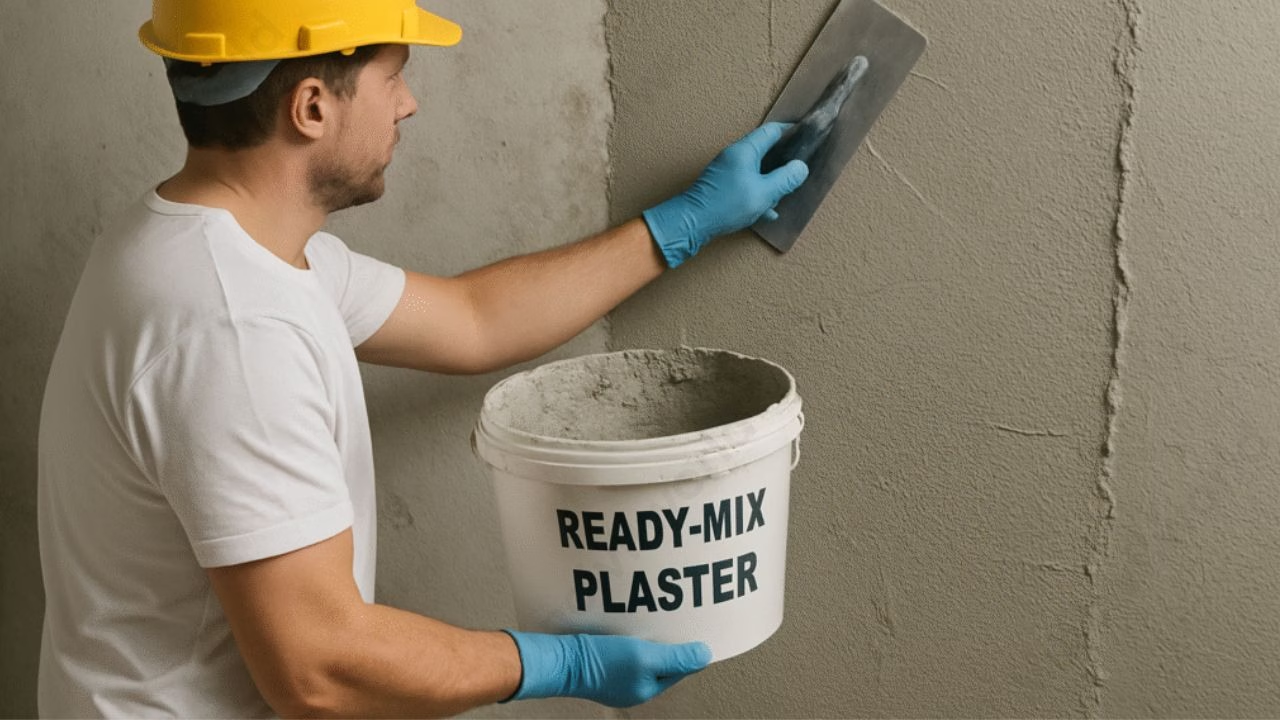
Ready mix plaster vs conventional or site mix plaster is an important comparison for selecting the right plastering material in building construction. Both materials serve the same purpose, but their performance and application methods are different. To understand the difference between ready mix plaster and conventional plaster, we must look at their composition and usage. Ready mix plaster is factory-made and delivered as a ready-to-use product, which improves consistency and saves time on site. It is manufactured using Portland Cement (53 Grade), graded sand, fly ash, lime, and additives such as fibres, plasticizers, waterproofing agents, proprietary admixtures, and other performance enhancers. All these ingredients mix together in a fully automated process to ensure better durability and quality in every batch. It ensures a smooth finish and offers many advantages of ready mix plaster, especially in fast-track projects. On the other hand, conventional plaster benefits include easy availability of materials and lower initial cost.
Builders often ask which is the best plaster for construction, and the answer depends on speed, quality, and budget. This article explains ready mix plaster vs site mix plaster to help you choose the best option.
What makes ready mix plaster a preferred option in place of conventional cement sand plaster?
Table of contents
Ready mix plaster
Ready mix plaster is a factory-produced plastering material designed to offer higher quality and better efficiency than traditional site-mixed plaster. It is manufactured using Portland Cement (53 Grade), graded sand, fly ash, lime, and polymer additives, including fibres, plasticizers, and waterproofing agents. These ingredients are mixed in perfect proportions using automated technology, ensuring uniform quality in every batch. This consistency is one of the major advantages of ready mix plaster, especially in fast-track construction projects.
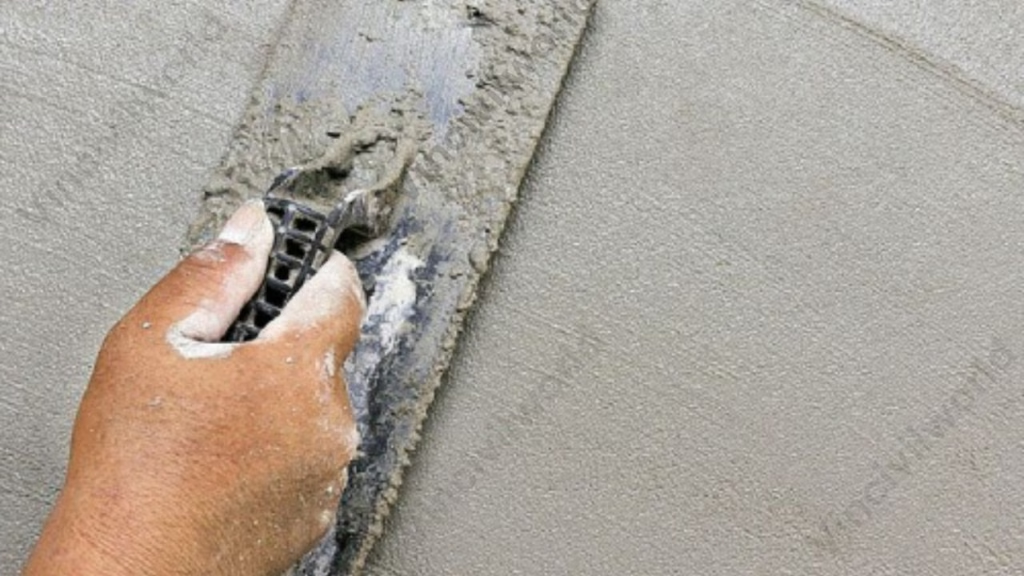
Unlike conventional plaster where sand and cement are mixed manually, ready mix plaster only requires the addition of water at the site. This reduces wastage, improves surface finish, and speeds up application. It also minimizes shrinkage cracks and ensures stronger bonding with the substrate. Therefore, when comparing ready mix plaster vs conventional plaster, ready mix plaster stands out as the best plaster for construction where durability, speed, and finish quality are important.
Cement sand plaster
Plastering is the prime construction activity presenting the exact look and feel of the building interiors and exteriors. The function of plastering is as follows.
- To provide a smooth, even, and durable surface for finishes like Putty/POP, painting, etc.
- They act as a barrier against atmospheric conditions involving moisture, water, snow, heat, dust, etc.
- Plastering can cover the defects, fine cracks, etc developed in the construction.
Ingredients like cement and sand are procured separately, conveyed, and mixed with water in the right proportions before application for conventional plaster.
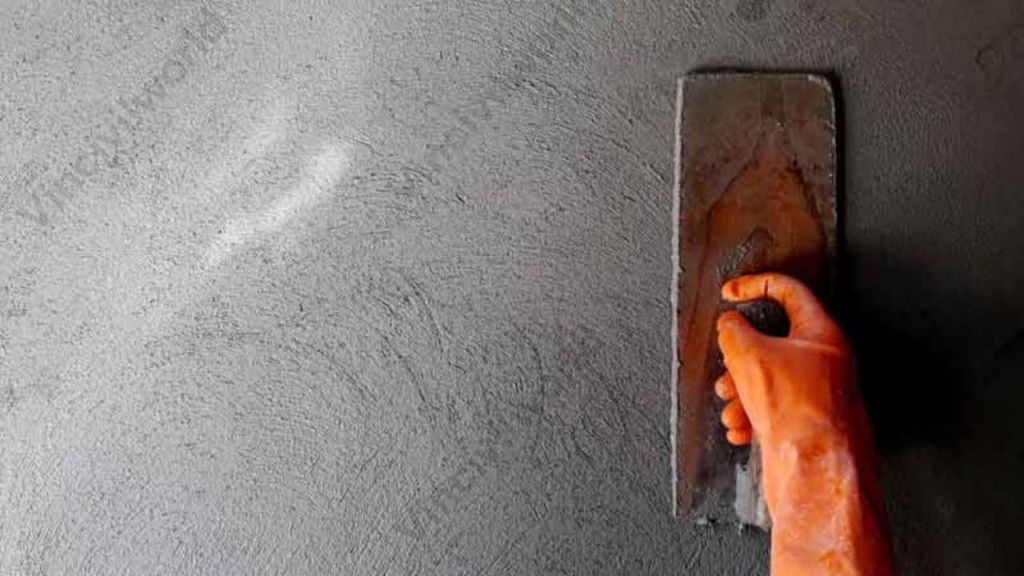
For maintaining a perfect plaster quality, the sand has to be graded and free from the slit and other organic impurities, etc. The quality is not followed in construction sites which in turn affects the plaster quality. Let us dive into the reasons why readymix plaster is a perfect and quality alternative against conventional cement sand plaster.
Also read : Gypsum plaster – A reliable plastering alternative
Video on Ready mix plaster vs site mix plaster
Ready-mix plaster vs conventional plaster
Comparing ready-mix plaster and conventional plaster helps identify differences in material quality, handling, mixing, wastage, and application so builders can choose the best plaster for construction needs. This can be done on the basis of a lot of parameters.
Comparison Parameters
- Quality of ingredients
- Material handling and mixing
- Wastage of ingredients
- Ease of application
- Curing requirement
- Shrinkage cracks
- Sand gradation
- Rebound wastage
- Storage and housekeeping needs
Comparison Table
| Comparison Parameter | Ready Mix Plaster | Conventional Plaster |
|---|---|---|
| Quality of ingredients | Factory-controlled mix with Portland Cement 53 Grade, graded sand, fly ash, and polymer additives ensuring durability and compact finish. | Sand sourced from riverbeds may contain silt/impurities; manual proportioning leads to variable quality. |
| Material handling & mixing | Delivered in ready-to-use form; ready mix plaster vs site mix plaster saves labor and time, only water required. | Loose materials procured separately and mixed manually; additional labor for conveying and mixing. |
| Wastage of materials | Minimal wastage and clean site environment. | High wastage of loose sand and more housekeeping requirement. |
| Ease of application | Better adhesion due to polymer additives; faster application and less rebound loss. | Low adhesion causes slow speed and more rebound wastage. |
| Curing requirement | 3–4 days only due to high water retention properties. | Minimum 7 days curing needed. |
| Shrinkage cracks | Very low due to optimized particle gradation and additives. | Higher risk of cracks due to ungraded sand and incorrect mix. |
| Storage & logistics | Packed bags make storage easy and weather-safe. | Loose sand and cement require more space and control. |
| Finish & durability | Smooth, consistent surface finish with better bonding and strength. | Finish and durability depend on workmanship and sand quality. |
Advantages of Ready Mix Plaster
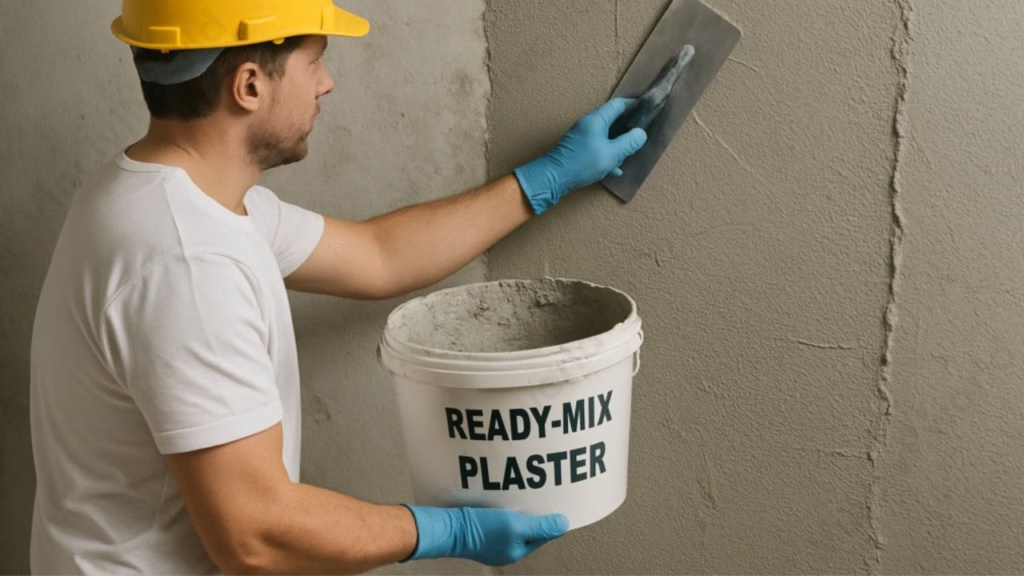
Comparing the advantages of ready mix plaster vs conventional plaster helps builders choose a faster, cleaner, and more durable solution for modern construction with better surface finish and minimal wastage.
| Particulars | Advantages of Ready Mix Plaster | Conventional Plaster Benefits |
| Application time | Very fast application due to better adhesion and controlled mix. | Slower application as adhesion depends on workmanship. |
| Ingredient quality & proportions | Factory-made with perfect proportions of graded sand, cement, and additives. | Manual mixing causes inconsistent proportions and strength variation. |
| Shrinkage cracks | Minimum shrinkage cracks due to well-graded particles and polymers. | High chance of cracks from ungraded sand and incorrect mixing. |
| Material handling and storage | Supplied in bags; easy to store, clean handling at site. | Loose materials require large space and careful protection. |
| Wastage | Very low wastage; excellent housekeeping advantages. | High material wastage leading to increased cost. |
| Organic efflorescence | Negligible efflorescence due to controlled material quality. | May occur because of impurities in river sand. |
| Sand gradation | Uniformly graded sand ensures strong and compact plaster. | Not graded; affects compactness and durability. |
| Rebound wastage | Very low rebound due to better bonding additives. | High rebound wastage resulting in material loss. |
Application Standards of Ready Mix Plaster
Ready mix plaster should be applied 8–10 mm thick on internal walls in a single coat. For external walls, an 8–10 mm base coat followed by an 8–10 mm finish coat ensures a total thickness of 16–20 mm. The maximum recommended aggregate size is around 3 mm for smooth and durable surfaces.

Key Takeaways
- Ready mix plaster offers consistent quality, faster application, and minimal wastage compared to conventional plaster.
- Conventional plaster requires manual mixing and may have variable quality due to sand impurities.
- Advantages of ready mix plaster include lower shrinkage cracks, better bonding, and easier storage.
- Understanding the difference between ready mix plaster vs conventional plaster helps builders choose the best option for construction needs.
- In conclusion, ready mix plaster is often a more economical choice due to its quality and efficiency.
Conclusion – Ready Mix Plaster vs Conventional Plaster
When comparing ready mix plaster vs conventional plaster, the benefits of ready mix plaster clearly stand out in modern construction. It offers faster application, reduced wastage, consistent ingredient quality, and a smooth, durable finish. Because it is manufactured in a factory-controlled environment using graded sand, Portland Cement 53 Grade, and polymer additives, it ensures stronger bonding and minimum shrinkage cracks. These features make ready mix plaster a reliable and cost-effective solution for fast-track projects. On the other hand, conventional plaster benefits include lower initial cost and easy availability of materials, but quality issues and labour dependency affect performance. Therefore, based on long-term durability, finishing quality, and productivity, ready mix plaster is the best plaster for construction in today’s industry.